Happy Halloween!
Well, as happy as it can be. I admit, I’m not feeling my best. I’ve been sick for most of October. Doctor gave me a new inhaler yesterday, a steroid inhaler, and this morning I felt worlds better; thank you God, Doctor, and Alvesco. Not that you want the nasty details, but one of the first things I started doing when I woke up this morning was coughing up great balls of phlegm, green as lime peelings, which I felt I was going to choke to death on. Anyway, that’s all down the drain and done with; now I just feel awake but exhausted.
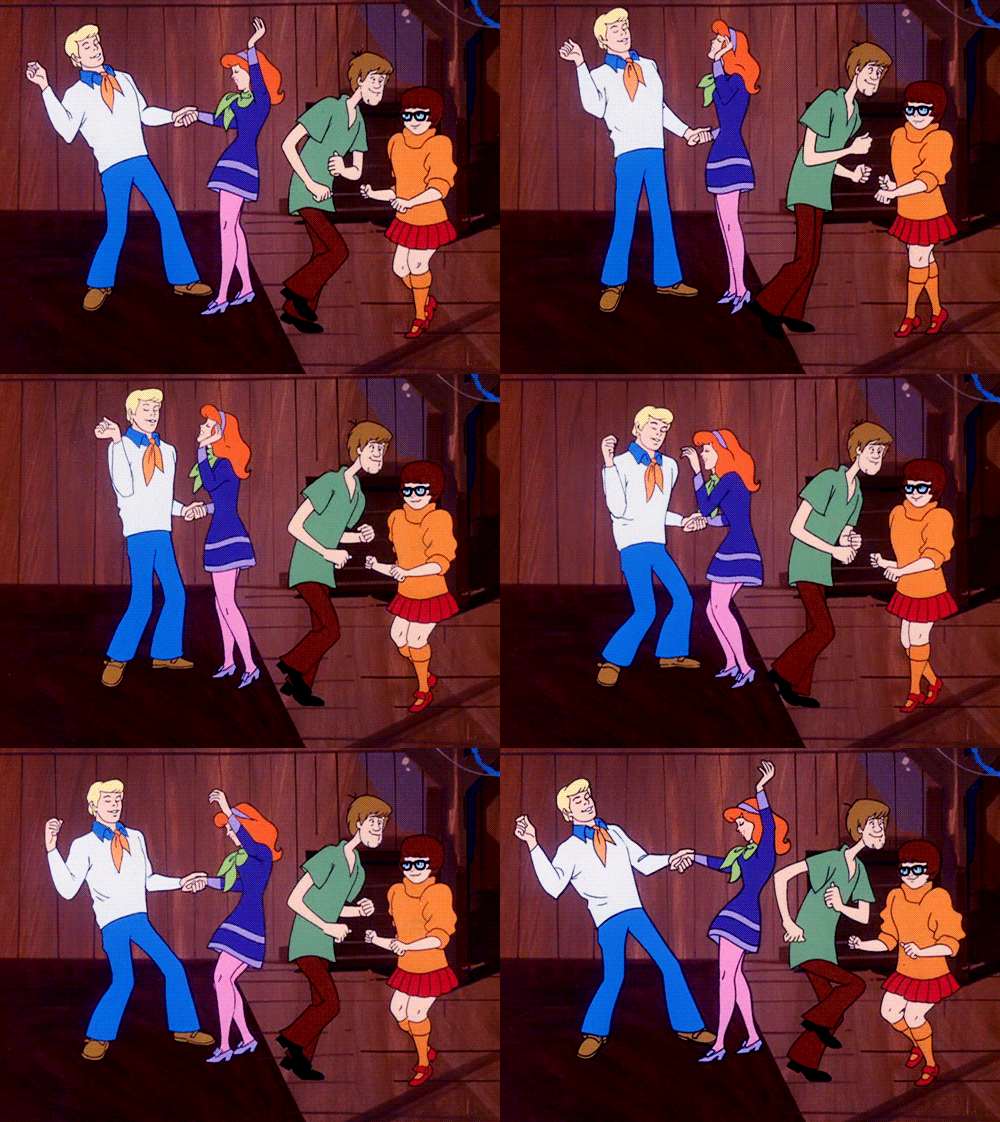
To enjoy Halloween, I’ve been trying to go through all the original run of Scooby-Doo. I don’t know where the idea came from, but I’m glad I did. Despite all of the cheap animation, nonsensical plots, and laugh-tracked jokes, it was contradictorily very funny, clever, and visually creative. I enjoyed myself rewatching this old children’s cartoon.
One of the things that struck me, however, was that the main cast seemed more fleshed out in the originals than in the succeeding shows. Maybe it’s all in my head, but it seems like the characters become one note in later productions. In the original, they were still simple stereotypes, but I think the creators were a bit closer to those stereotypes and understood them better. In that way, Velma could be the most insightful or the most blind, but for the same underlying reason, very well symbolized by her glasses; where something fits into her worldview, she sees it clearly enough, but once doubt creeps in, she becomes blind. Her blindness, however, is not always a detriment. She often stumbles upon a clue or secret chamber in groping for her glasses; in literal or metaphorical states of blindness, she often hurts the villain, and never learns of it.
Daphne is in some sense the pretty idiot that later versions try to correct. Originally clumsy, the live action movie makes her a skilled martial artist. Originally hanging onto Fred in a demure way, later versions separate them, giving her chances to shine on her own. These are not bad changes in and of themselves, but there is something strong about her underlying character that feminism cannot comprehend. She is not the bimbo, she is the lady. It’s Velma wearing the coconut shells and grass skirt in “A Tiki Scare is no Fair”; Daphne is in the less revealing and more modest swimsuit. If she isn’t the great mental force of the group, she shows herself often enough to be the moral voice. If she isn’t the great detective of the group, it is because that isn’t what she’s focused on: she’s focused on her friends, on people in need, and her hair.
Fred is, admittedly, pretty stiff, and is probably the one character that becomes more rounded in later remakes; however, his stiffness is an asset to the whole group, originally. His is the voice of command, and even when he is wrong, he’s always a stabilizing force in the chaos of fear. If his (humorously complex) plans never work out the way he intends, they still provide a framework for the rest of the gang to face their fears and unmask the villain.
Shaggy, I fear, is the most misunderstood and flattened character. As people reimagine Scooby and the Gang, he becomes more cowardly and selfish. As I see him in the original show, however, his “fear” is often not just for himself. He is very concerned for the safety of his friends. I’m not saying that there are no jokes about him being willing to abandon everyone for a slice of pie, but those jokes have become nearly his whole character in later tellings to the detriment of another quality that has been nearly dropped: he’s very clever and resourceful. This is primarily seen in the visual gags; Shaggy is a sort of king of charades, able to make props out of any loose piece of junk. Take “Bedlam and the Big Top,” however, and see how it’s Shaggy that, not necessarily solving any mystery, solves the problem by guile, out-tricking the trickster. Nowadays, he may be allowed to do something similar, but probably only during a musical interlude where it will not affect the status quo.
Now we come to the heart of the show, who has not really changed from the lovable dog that he is. Whether he be the simple talking-pet of a children’s cartoon or the descendant of Lovecraftian beings called the Anunnaki, it doesn’t matter; he is himself, and I can’t help but love him.
Anyway, it is my general custom, when I am sick and good for nothing, to watch Scooby-Doo; just turn my brain off and rest. I hope you all are having a better October than I am, and that your Halloween is full of pleasant frights and merry laughs.
Oh, let me add this post-script: While rewatching the original show, I started to add to my own head canon the idea that Fred and Velma, the two most interested in catching criminals, formed the gang originally, dragging their two significant others along; Daphne and Shaggy are only humoring their love interests, and that’s why they’re so often wrong-footed by the monsters whereas Fred and Velma are all in.

