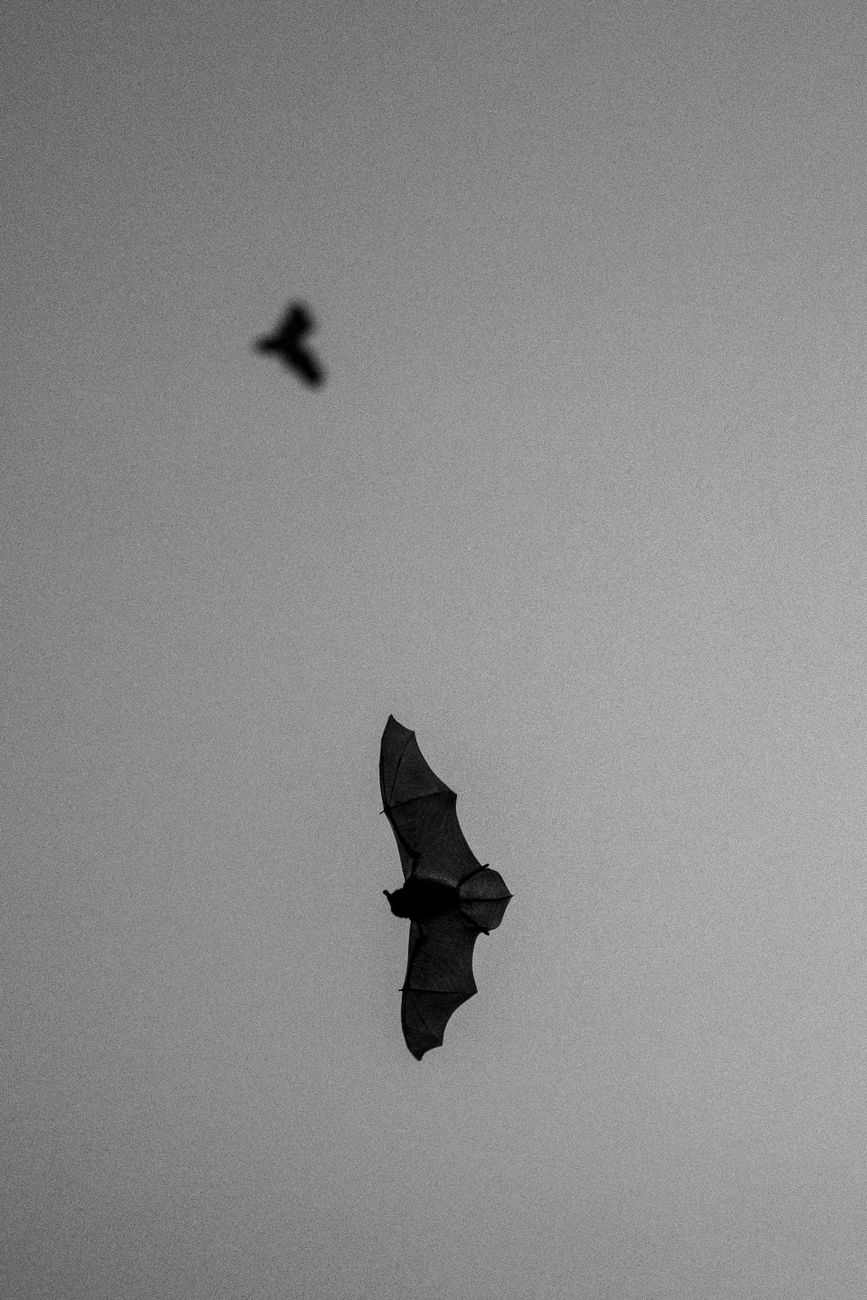
A night or so ago, while I was trying to pray, a fancy took hold of my imagination. It was something along the lines of what it would be like to find myself in Gotham City in some sort of colloquy with Batman. Images and ideas dogged me throughout my time of prayer and meditation. Finally, as I finished, I allowed the idea free rein.
First, a little puzzle game. How should I tell Batman I knew things I shouldn’t without advertising to the terrible criminals what I knew? It rarely ends well for the person who knows who Batman is under the cowl; if the villains think they can get the information from you, they might kidnap and torture you.
It suddenly came to me that I could contrive to hint at Batman’s origins through a literary reference: I might talk about “The String of Pearls,” one of the worst books I’ve ever read; having read it, though, I think I could make allusions to it and to Batman’s origin at one and the same time.
The fancy might have ended there. An interesting problem solved, I think, in an interesting way. However, I kept on. You see, the idea had struck me that Batman was a saint, of a sort. No, he wasn’t real, at least, not as far as I know, nor even, in his own setting, was he at all likely to be canonized by the church.
What he was, though, was a symbol or ideal that meant much to me; to me and so many more. It was as if, in that moment after my prayers, I could see all the children of the world, past, present, and future, watching Batman’s struggle. They see him knocked down again and again; indomitable, he’s seen getting back up. They see him when he himself is alone and unseen and tempted to sin, and they see virtue. Because, in the end, he is Plato’s virtuous man who appears vicious, the hero dressed up as a villain; as he takes on that symbol of death and dread, a bat, he leads us to take up our crosses too.
Because he’s Batman, because he does always get up again for us, because we see him being the same person in private as he is in public—with the cowl on or off—we too are made more virtuous; we wish to be Batman. I wanted to wear my Batman cape forever and never take it off, though dad made me take it off at bedtime lest the strings tied around my neck choke me.
We can, though, keep playing Batman even when we grow up. We can face our tragedies and fears through virtue and perseverance.
As I tried to explain to Batman, the Batman that I saw in my mind, that he was a saint, I found the final argument.
“Love,” I told him. “You do it all for love. You love this city, this people. You have given your whole life over to helping them, and though that life isn’t spent yet, it has spread throughout worlds that you cannot know. Your story is told again and again. You inspire generation after generation to be a man, a hero, to lay down your life for others. Whether you’re real or not, you teach us to love, what love looks like, and that’s more real than anything.”
And now, as I write this out, two things haunt me. There is a terrible weight upon the inheritors of these tales, to tell them again, and to tell them right. And I, I realize, seeking to be a writer and teller of tales, may one day too, inspire. I too may craft a world or character that a child might read and love. It is too great for me.

