There are some things we can only talk about, but never fully express. A longing consumes me for which no antidote can be sought. Like wandering in the fog, you always feel the next step will take you to that place, that somewhere hinted at, but you always come to a fence or a wall. You never quite reach the dream’s end, its full consummation. Today it felt like a pressure on my chest, like unspoken sorrow paired with the feeling of Christmas Eve, the time when one can barely wait for the morrow.
I’ve always felt this strongest at Autumn-time, and though it is a painful pleasure, a sweet sigh, in its absence I long for that mysterious aching, as if I were dead without it. Is this a will-o’-the-wisp, a light leading me onto my death, a vainglory I should despise? Or is it what it claims to be? But what are the claims of this mysterious heartache, what proportions does it give of itself?
It starts so little, a small thing that makes you slow down and just stare into space. In the quiet it grows, its roots twisting around you, somehow crushing you. I hear the sound of rain, its pitter-patter accenting the groaning of my soul, it takes me over. This thing that comes like a pinprick overshadows the whole of my perception. How has this mountain come inside of me?
“Sweet longing,” I sigh, but for what? It’s like a part of me knows and is afraid to say, like one lover blushing at the thought of the other. It purports itself good, almost as if you were chasing goodness, but does not hide this facet of dreadful seriousness, a daunting, near unapproachable, quality.
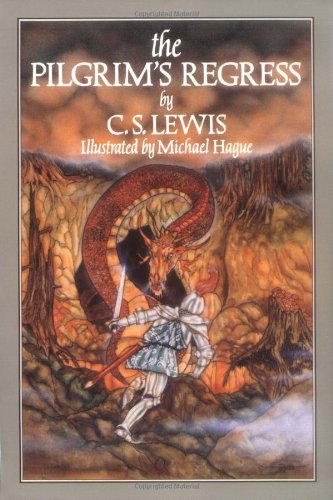
In his book, The Pilgrim’s Regress, C. S. Lewis retells how this longing directed his life. Within Afterward to Third Edition, Lewis clarifies what he has been talking about:
The experience is one of intense longing. It is distinguished from other longings by two things. In the first place, though the sense of want is acute and even painful, yet the mere wanting is felt to be somehow a delight. Other desires are felt as pleasures only if satisfaction is expected in the near future: hunger is pleasant only while we know (or believe) that we are soon going to eat. But this desire, even when there is no hope of possible satisfaction, continues to be prized, and even to be preferred to anything else in the world, by those who have once felt it. This hunger is better than any other fullness; this poverty better than all other wealth. And thus it comes about, that if the desire is long absent, it may itself be desired, and that new desiring becomes a new instance of the original desire, though the subject may not at once recognize the fact and thus cries out for his lost youth of soul at the very moment in which he is being rejuvenated. This sounds complicated, but it is simple when we live it. ‘Oh to feel as I did then!’ we cry; not noticing that even while we say the words the very feeling whose loss we lament is rising again in all its old bitter-sweetness. For this sweet Desire cuts across our ordinary distinctions between wanting and having. To have it is, by definition, a want: to want it, we find, is to have it.
Somewhere in writing all this down, I’ve answered the want.
Related posts:
Heart’s Emptiness
Cast Out Fear
 Tale Told
1 Comment