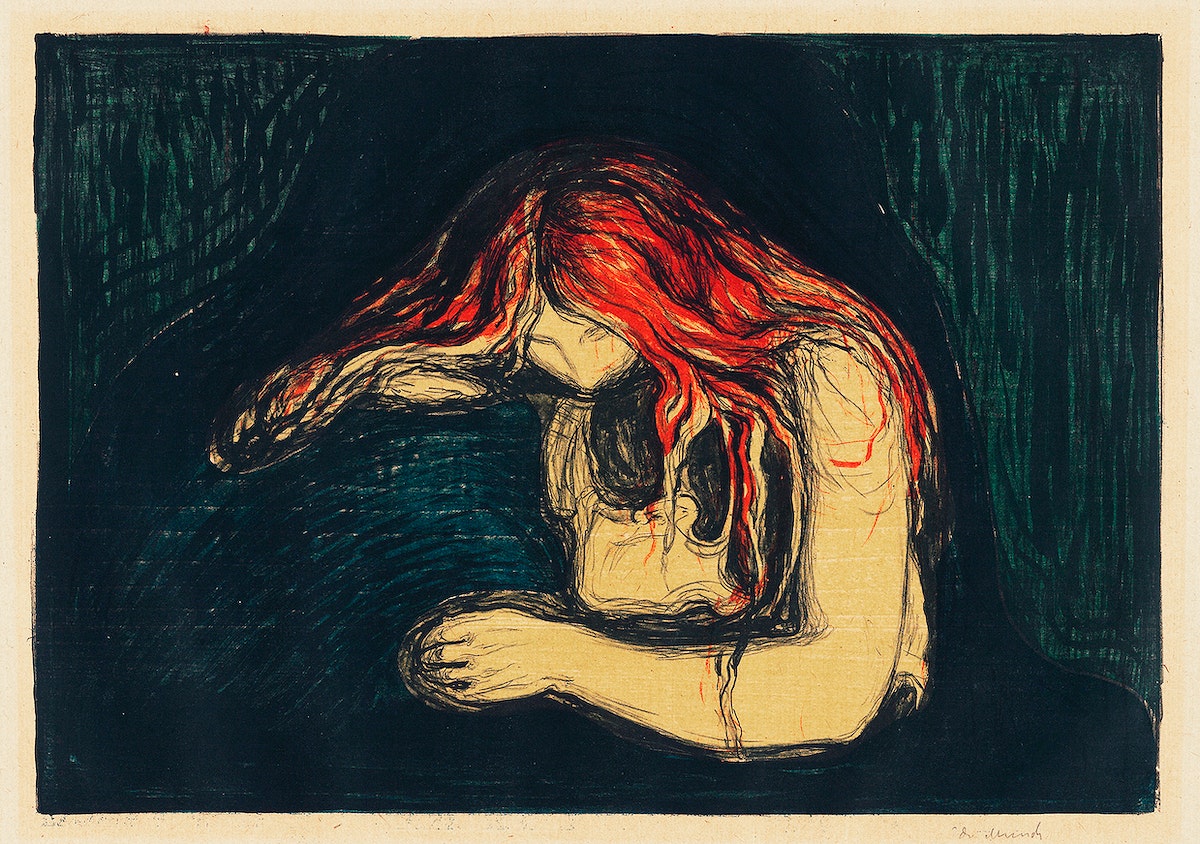
I am sick. Fever. Brain dead. Everything hurts. Here’s something from the archives.
Okay, a warning, my answer is going to get kind of nerdy. Let’s go.
For a vampire story I’ve been working on, I wanted each of my main vampires to have a name associated with the Devil or at least a biblical demon. The main character is Satan, his boss is the Devil, his best friend is Lucifer. (There is a thematic reason for all this, but that’s not important right now.)
So, I also needed some female names for this, three in fact. I wanted to leave Leviathan (Behemoth also) out of the pool, and at this point I realized most demons are depicted as masculine in the Bible. There is, however, one notable exception, Lilith, the mother of monsters. (That epithet, however, is extra-biblical).
Anyway, I already knew of Lilith before this because of my Hebrew studies, and I had always assumed it was derived from the word for night.
English -> Transliteration -> Hebrew
Lilith = Lilith = (לִילִית)
Night = Layla = (לַילָה)
If you’ve studied Hebrew, you know that the He (ה) and the Tav (ת) are related letters, and if you’re familiar with the word Behemoth, you might be interested in the fact that a literal reading of the name could be “cows,” with an emphasis on the plural. (Hebrew sometimes uses a plural word with singular pronouns to suggest the idea of the most that thing of a category. So, Behemoth comes from the word beast, and in English we might say Behemoth is the beast of beasts, the top dog, as it were.) Anyway, I always assumed that was what the name Lilith meant, something like the “Queen of the night.” However, some scholars debate that interpretation, as Lilith may be a loan word into Hebrew.
Anyway, Lilith was the perfect name for one of my characters, a female demon who devours her lovers.

