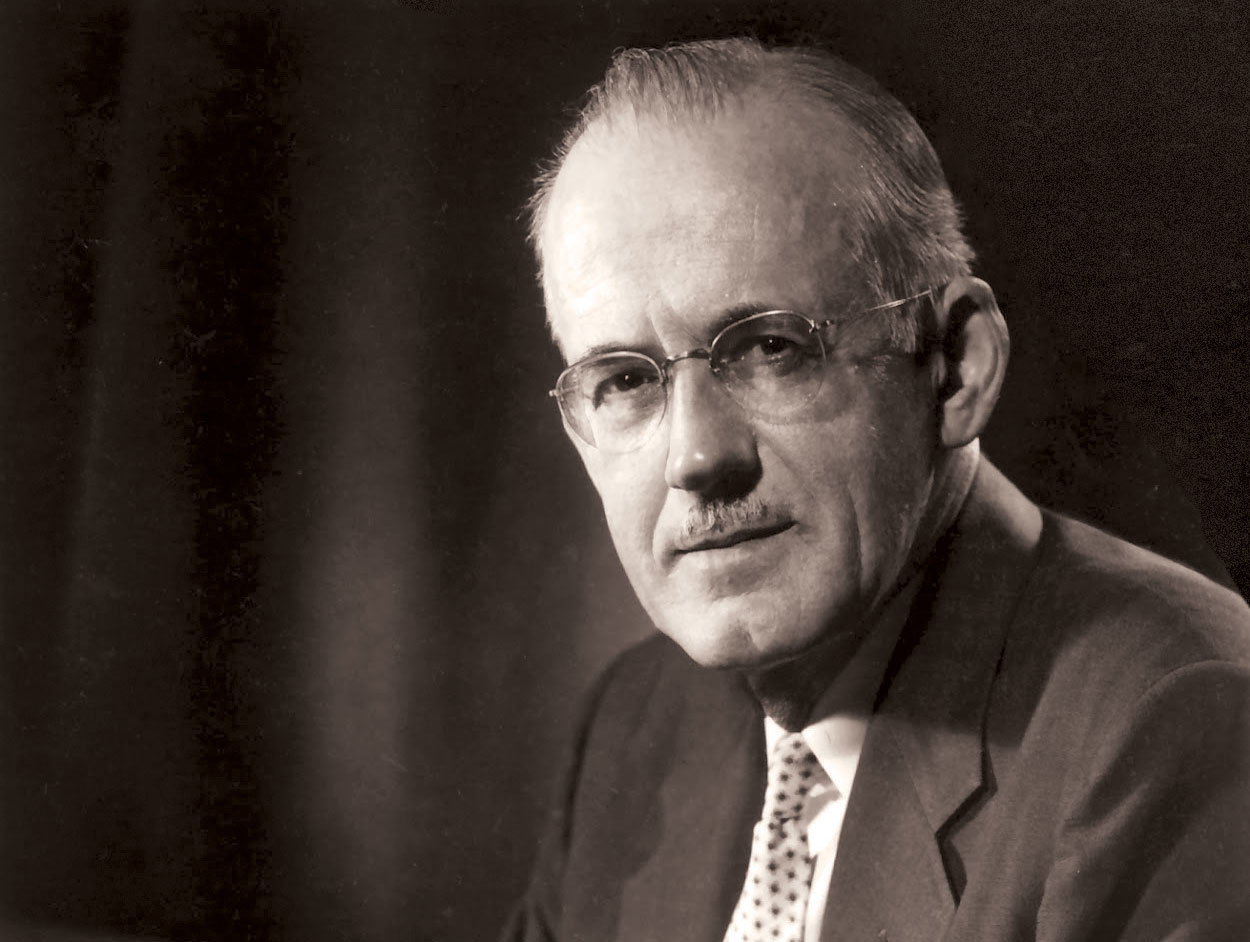
[The work under discussion is The Pursuit of God by A. W. Tozer.]
I had two major impressions while reading Tozer: On the one hand, I generally agree with the declarations in this book, and on the other, I don’t think he provides good proofs for these declarations. My fear is that this book verges into propaganda. Though I think good reasons can be given for his positions, I do not think he presents these reasons, or, when he does, they are presented almost grudgingly, as if he wants to get back to the real meat of what he’s saying.
While reading, I thought that the same points could have been presented better in another format. Tozer seems to be employed in writing what I will call essay, by which I mean, non-embellished statements collected to make some point, while also directing his points towards the hearts of his readers. Yet, essays are meant not so much for the heart as the head. I largely agree with what he says, and I would boil down the main point of his book as such: Worship God. Our eyes should be on God, I agree, and not on ourselves, our communities, our friends or enemies. I think if I wanted to present this point to the heart of someone else sans an intellectual argument, narrative or poetic writing would do better. Essay, as far as I know, is meant to help us understand our insights, and yet the whole work seemed intent on taking our focus from understanding to experiencing. Essay is, in my experience, the wrong tool for this; poetry is better suited.
Obviously, Tozer has had a great impact on the church, and I reaffirm that I am mostly in agreement with him. However, I do not particularly care for how he writes. I suspect this is more a generational gap than anything else, but his writing feels manipulative (even disingenuous) from my twenty-something perspective. Again, I come from a faithless and incredulous generation; I grew up with children’s shows like Invader Zim where the prevailing punchline is the cruelty and meaninglessness of life: The language I use and expect is perhaps different from the language Tozer would have used a generation or so back.
Let’s take a look at chapter four. Tozer says something which badly needs saying: Relativists do not live out relativism. Only a madman would or could, and relativists are not mad, merely disingenuous. This seems a plain enough truth that I do not here complain that there is no prolonged argument over the matter. This whole chapter, whether I like the writing style or not, is well christened by the reference to psalm 34:8, for in the face of sophism, it is right to say, “Taste and see.”
Yet, throughout this chapter, I am troubled by Tozer’s treatment of imagination and reckoning. His dichotomy between those who believe in reality and those who pretend not to is welcome; Yet his second dichotomy seems ridiculous. I barely know how to critique it, I find I barely understand it, and this is my problem: he gives a definition of his terms, but I still don’t know what he is talking about. He is not arguing for his point, or not doing what I would call arguing, he is asserting a belief, a belief I don’t understand. I reread the paragraph on page 41 again and again, but the words fail to click in my head. I think we run into the same problem in the next chapter.
“There we must begin,” says Tozer, but I am already questioning his premise. In chapter five, Tozer rightly declares that matter, needing a cause, is not the beginning, but then goes on to treat the Law and the Mind similarly. I stop myself and ask, What is Jesus if not the word made flesh? What is this word, this eternal word, if it is not the Law? The Law of God is not planned, it is God’s expression of God. Similarly, I do not think that Tozer is right in saying that the Mind needs to be created. Maybe we are not defining our terms in the same way, but I take the word Mind to mean knowledge of self. It would be heterodox to assert that God is absent a Mind, that God is unaware of himself, which I don’t believe Tozer to mean. However, I don’t know what he means at this point. He seems to be denying that God is a Mind or Law (we both reject the pantheist view that God is matter), to express an opinion we both hold, namely the quality of God theologians call transcendence. We both believe that God, the cause of all which is, transcends that which he causes, but if I understand Tozer, he’s taking this a step further, claiming that God causes nothing which is like God. “I have said you are gods,” Jesus quotes. It seems that God creates some things like matter which he is not, but also creates things which share in what he is, namely us.
Tozer and I do not communicate well. I do not understand him at times, and because he is not focused on arguing or explaining his positions, I am left floundering. Yet, these issues are the minority: In most cases, I wholeheartedly approve what he says. A few pages later, he so accurately describes the problems in the church that I feel he’s putting my own thoughts to words, and I think his general prescription is good: Seek God—plain, simple, and true.
Finally, I would like to consider the end of chapter nine. Tozer condemns artificiality and pretense, but also proposes some absurd notion that children are the model we should follow if we wish to be free of such sin. He describes children as somehow free of envy. I have never known a child free from envy—I have never even known something as low as a dog or cat to be free of envy. Even babies seem jealous if anyone takes their mother’s attention. No, it is not age or culture which brings about such things; on the contrary, it is as one grows older, as one is educated, that he realizes his own intrinsic meanness of person. I disagree with Tozer here. I think it is good that we feel shame. I agree with him that the methods of avoiding shame are artifices, but I do not think all artifices bad. Ours is not a “false sense of shame.” It would be worse—nay, it is worse, for it is the very world we now live in. To parody Tozer’s own words: There is hardly a man or woman who dares cover his or her shame. I am remembered of a thief I once observed and talked with. He was brazen and without shame for what he was. It is better, I think, for shameful creatures like ourselves to put on artifices. These may be fig leaves which ought to be condemned, or they may be the bloody sacrifices of God which ought to be respected. Not all artifices are equal.
 Tale Told
I Corinthians 2:14: “But the natural man receiveth not the things of the Spirit of God: for they are foolishness unto him: neither can he know them, because they are spiritually discerned.”
LikeLike