It is an aspect of science to simplify its scope to the level of nature, to see all things in a calculus. By this flattening, this subtraction of dimension from the viewed object, science has revealed the underlying clockwork of the universe, and though promising little or nothing, delivers power beyond the wildest dreams of the magician.
Victor Frankenstein, in his boyhood, studies the fantastic, but ultimately impotent, art of alchemy. His dreams are shattered when the world about him displays contempt for the theories and teachers he idolized. However, sent off to university, he finds one professor to guide him forward. Not disabusing Victor by mockery, this educator acknowledges the progression of thought, how moving from glamourous magic to the plainer sister science, modernity produced wonderful offspring.
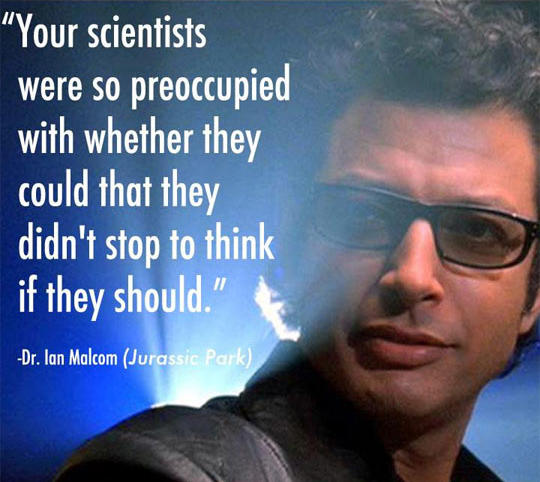
Yet Victor, generating a “child” from this plain sister, at once repents upon seeing the delivery of his work, and his story resonates so clearly that it is oft retold. What is this changeling we fear of our own labor? Why do we instinctively feel this story true, understand the veracity of the warning that science’s scope should refrain from some objects?
The answer is in the story itself: To place life, human life, in the realm of science is to take from it the fullness of reality, to make of it an object to be manipulated. Yet, in shrinking life down to fit into science, and manipulating it from that viewpoint, Victor is blind to the full implication of his action. Life refuses to be boxed in, and in the culmination of his unchecked fiddling, Victor is surprised—horrified—to look into the eyes of his own creation, to see that it sees.
 Tale Told
A very profound but true statement!
LikeLiked by 2 people
Thank you. I’d been musing on this for some time.
LikeLiked by 1 person