I owe the idea to a speech given by the late Nabeel Qureshi for which I have not the energy, or perhaps it is the interest, in finding again. To the question of why God allows evil and suffering, the answer is “You.” A thought experiment may suffice: I am generally of Norwegian stock, and I read somewhere in a scientific article, which I am also too lazy to dig up, that Norwegian DNA shows an English maternal ancestry; that is to say, if you’re Norwegian, somewhere back in the day, your great-great-great grandmother was kidnapped and raped and forced to live a life in a foreign land. Such science and history teach. The veracity of the idea is not of the moment; accepting the idea for the present, this means that, if God had made a world without evil and suffering, I would not exist. Even if science and history is wrong here, who among us can claim their antecedents free of similar crimes? We all have sinned in birth, and now cry out to God asking why, in His mercy for us, He let us exist. Again, God is love.
Then another idea has sprung up in my mind. Do we know that God has not placed bumpers up over the gutters? We may look at the world and think it a horror, but what if we are not even allowed to know or conceive of worse things? We say, “Look at this evil you allow,” and God may smile and say, “Do not look at the evil I don’t allow.”
God may also say, and this one is hard to conceive, that it’s taken care of. Existence transcending time and space may look at the evil of this present world as something undone. If we find ourselves in Heaven, we may say, “Oh, I see how You have turned evil to good.” This is hard to say as this is something that, if true, is known for now only by faith.
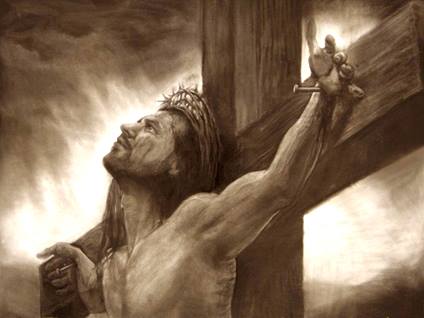
Yet the ground of this faith is also an argument to consider, for in Christ’s bleeding wounds, we see that the incarnation has entered this senseless barrage of officious and standardized evil which man cannot stop himself from, generation by generation, generating. God may answer us, not by words but in deeds; and if He looks down on us as we ask, He is looking down from the cross. Let God’s answer to suffering, even if the answer’s a sort of silence, be the answer given Job, “You do not know.”
 Tale Told