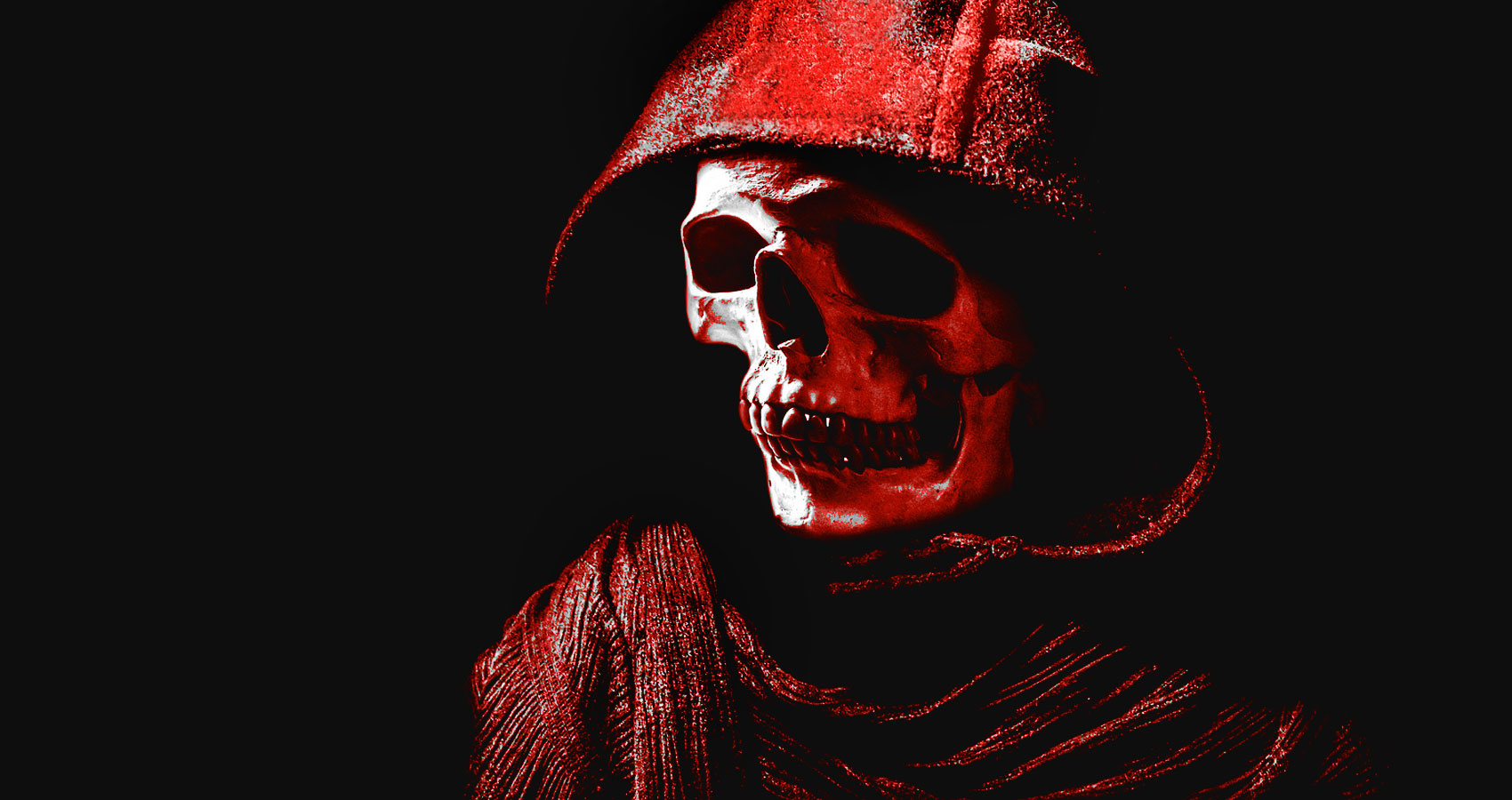
There seem to me to be different types of undeath.
In the basic conceit, undeath is best described by Barbossa in Pirates of the Caribbean: Neither living nor dead. We might call these revenants, things that cannot be killed because they are in some sort of limbo between the states of life and death.
Another comes to mind of the sleeping beauty, where death is softened into sleep. This is almost the opposite of the first. Where the first is something dying trapped in life, here we have something living trapped in death. We might draw a mental picture, life and death as separate spheres, the undead of the first type being beings drawn to the sphere of death but caught in the sphere of life while the other is caught in the sphere of death but would naturally return to the sphere of life. Think of Merlin and Arthur.
Now, a third type of undead appears in my mind: the first type of undead, the undead who were alive and would be dead but for some sort of mortem failure, we might imagine having a subclass, something that never was alive. While it is in the sphere of death, it is in its natural state, only, we may imagine, something brings it to the living sphere. Consider the personification of death as an instance, or perhaps Cthulhu, or best yet, Frankenstein’s monster. Undead may be the wrong term for this; demonic might be a better one. I’m not sure, either, if sphere of death is the right term. The Realm of the Potential might be a better term. I think Underworld encapsulates what I mean fairly well.
I see a pattern, and in the pattern, a fourth class. If we have the main as something unable to die and two opposites, one being a type unable to live and another a type naturally belonging to the “underworld,” this provides two axes, that of where you belong and that of where you are from.
- The revenant is from the living sphere, is in the living sphere, but belongs to the underworld.
- The sleeping beauty is from the living sphere, is in the underworld, and belongs to the living sphere.
- The demon is from the underworld, is in the living sphere, but belongs to the underworld.
- Something which is from the underworld, is in the underworld, but belongs to the living sphere.
Here a third element reveals itself, though it may be mostly discounted for this digression. I might call it the element of direction. However, not everything along this axis needs be called undead. Something from the living sphere belonging to the underworld and in the underworld is just dead. We might say this axis is the axis that determines whether something is or is not undead. Is it where it belongs as regards the living sphere and the underworld or is it in limbo? Let’s look at our list again, reversing each along the belonging axis.
- The living are from the living sphere, are in the living sphere, and belong to the living sphere.
- The dead are from the living sphere, are in the underworld, and belong to the underworld.
- The resurrected are from the underworld, are in the living sphere, and belong to the living sphere.[1]
- Something which is from the underworld, is in the underworld, and belongs to the underworld.
A through D are not undead. If undeath is a sort of limbo, then there has to be some sort of mismatch between where a thing is and where the thing belongs. We may, for a second, consider psychopomps who in some sense belong to both worlds and yet to neither. I do not think they need to be undead, but cases like Davey Jones might well fit the category. They seem to do double duty, and probably belong to their own class.
My main reason for considering all this is that of the fourth class. I’ll probably publish this nonsense to my blog shortly, but this is more of a conversation with myself that I’m letting anyone who wants to read read.
What can I think of that fits the fourth class? Souls in bondage, the sleeping beauties may conceive, and generations may be begotten in the shadowed underworld. Persephone has children. Imagine with me a race of wayfarers who long for a light they’ve never known, chthonic Israelites searching for a promised land. If the princess is awoken with a kiss, who will call the children of the night up from the grave?
The underworld is a world of potential. Let us say an action is taken that stops two lovers from meeting—that relationship they never had, but known in the imagination of both, haunts them. There’s one idea. A child, an heir, that might have been, but never was, haunts the memory of a dying billionaire. I think also, either the Watcher or the Valeyard from Doctor Who fit this type.
And we, of the marvelous modern mode of life, who have killed off the next generation before they ever left the darkness of the womb, how shall we answer those millions unnamed when we hear their voices calling to us from the darkness of the world we refuse to see?
And the Raven, never flitting, still is sitting, still is sitting
On the pallid bust of Pallas just above my chamber door;
And his eyes have all the seeming of a demon’s that is dreaming,
And the lamp-light o’er him streaming throws his shadow on the floor;
And my soul from out that shadow that lies floating on the floor
Shall be lifted—nevermore!
[1] If we think of Lazarus being in the grave for four days, I think we are to understand that he was, in some way, then habituated to death, or fully claimed. The miracle in having him come back to life afterward is partly that that he went from B and eventually to A, not B to D or I. So, from A to B is death. From B to C is resurrection. From C back to A is habituation.
 Tale Told