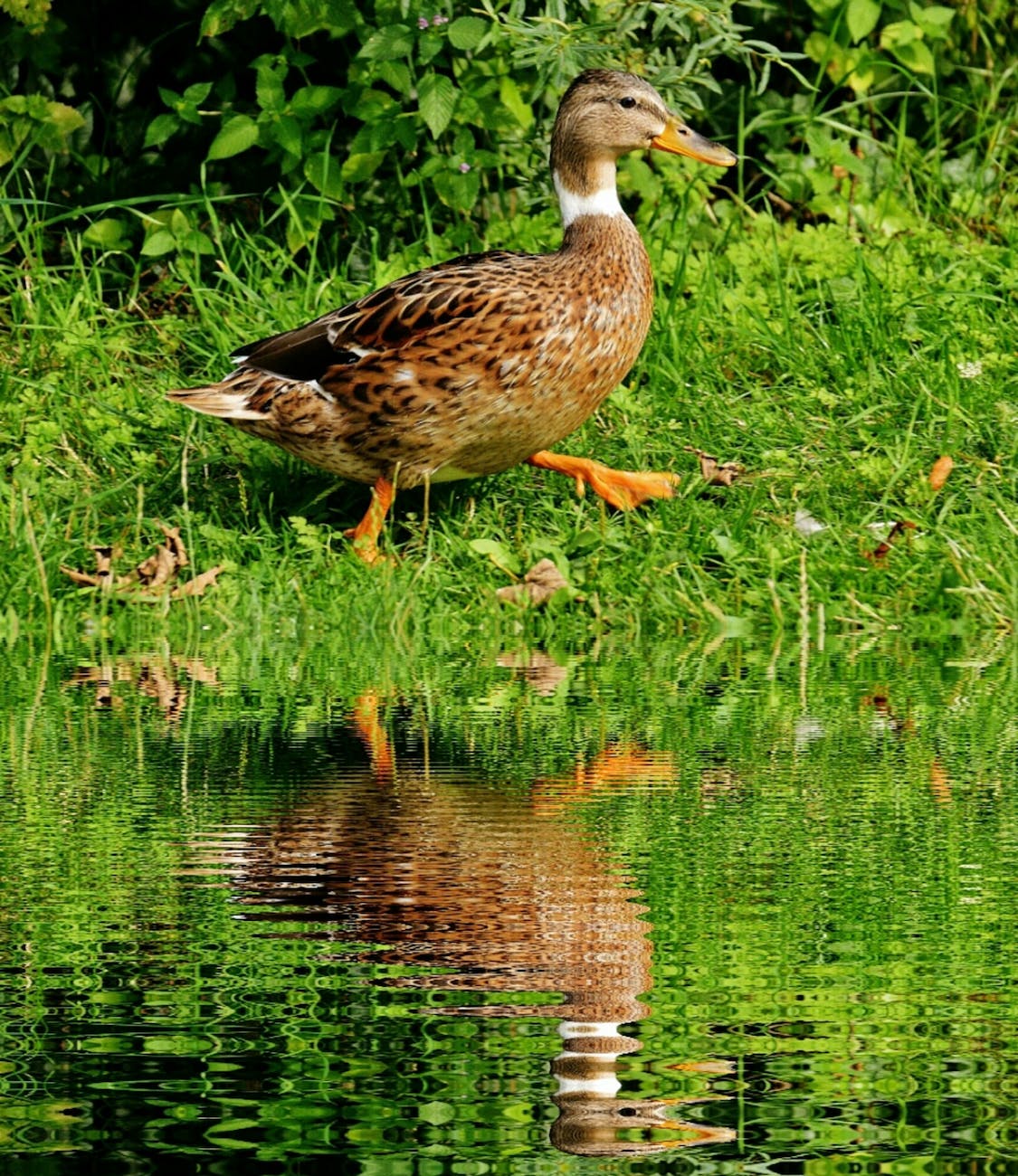
There is an old saying that if it looks like a duck, walks like a duck, and quacks like a duck, then it’s a duck. Imagine, if you would, that you had never heard of or known anything about magnets and someone had told you a story where the hero rescues his ship by using a strange strip of metal to divine his way home. You would call it a phantasy until you learned about magnetism and compasses, and that is, by the way, what the word science comes from, the Latin for knowledge. You would probably still ascribe some level of awe to it until this knowledge had, over time, grown mundane.
I think science and magic are the same thing, only one word we use when we have, in some sense, comprehended or conquered the principle, and the other word we use when the thing is otherwise inexplicable. The humor, it seems to me, is that we rarely realize that our explanations are not explanations at all.
We say that the compass points north because of the earth’s electromagnetic field. We can show you the field around a magnetized piece of metal with some graphite, show how the fields align, and so forth. We can talk for hours about how the compass can lead us home without ever understanding why it works the way it does. Or, if you’ve got some explanation I don’t remember from physics, just realize that that answer is again a “how” answer begging a new “why.” That is the joy of science: every answer brings about new questions. But science can never be perfected because in the end some statement of value apart from statements of cause-and-effect must be made, that is, some base assertion that “it is,” must eventually be made, or, perhaps, if we delve to the end of all the “hows” of the natural world, we will be left with the final “why” for which the only possible answer is, “I am.”
 Tale Told