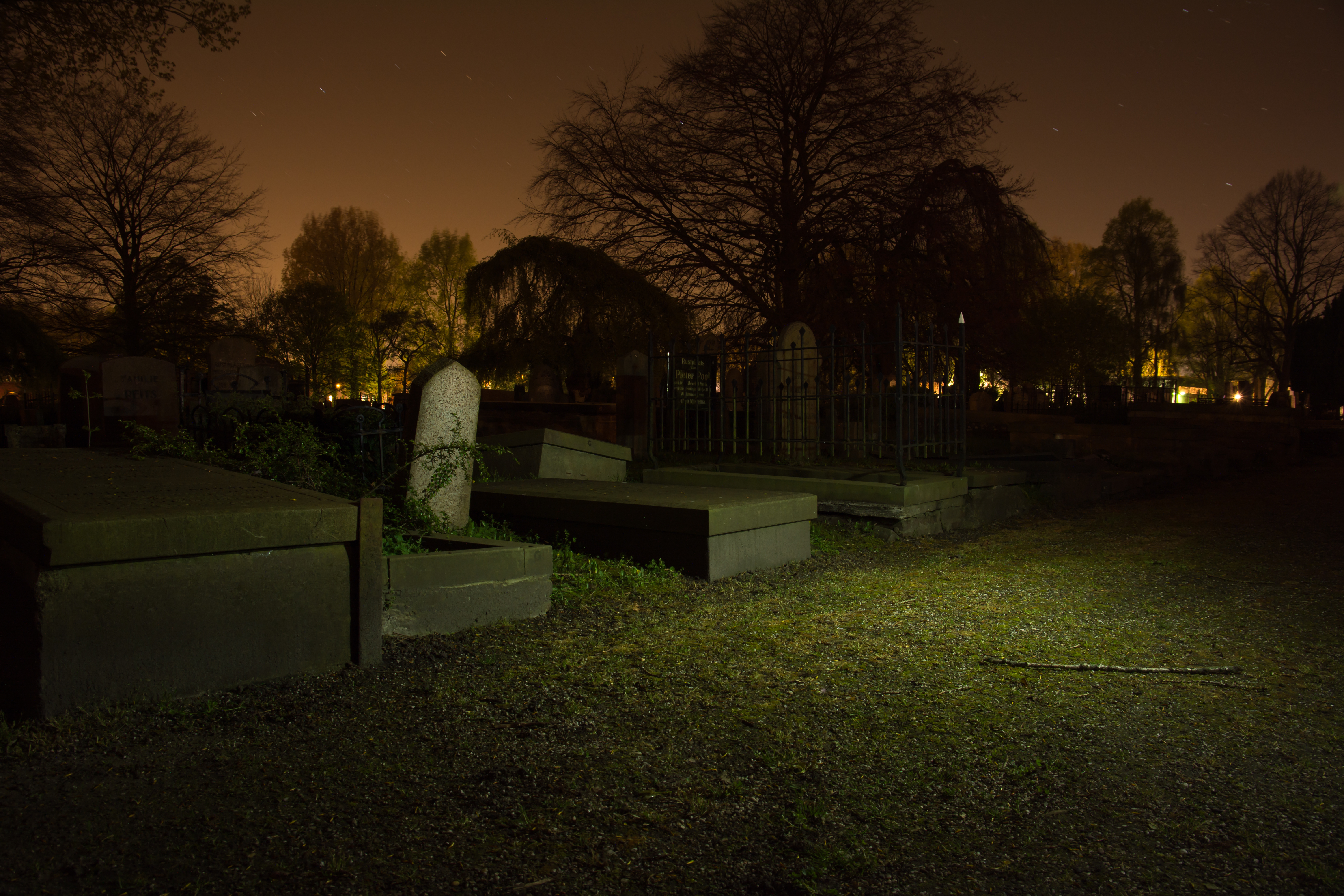
What a terrible silence lies over this black sepulchre. To some, this was the grave of the devil, to some, of god, but, to Mr. Turndal, it was the grave of his father. It was a black structure of black stones, and its shadowed portal lay opened, waiting like—far too much alike for my tastes—ever yawning death.
“Here sir,” I said, handing my master the wreath of flowers. We had been delayed by the trains, delayed by the stagecoach, delayed at the flower shop; we had missed his father’s internment, but we had come.
My master did not reply, but seemed to grow stiff as he hooked his arm through the ring of black ribbons and white roses. He swallowed, that nervous swallow that always gave him away at cards. With a nod, he stepped forward and marched into the sepulchre.
What lay for him amid the shadows of his forefathers, I cannot say. That it was his own destiny one day to enter there and rest, that is known. If such thoughts troubled him in that darkness, or if they did not, I cannot attest. I think, though, he may be the only man who knew the deceased, really knew him, and so was really the only true mourner, the only one who actually loved the person entombed and not some idea of him. He loved him and, I knew, hated him, and hated him with knowledge that few had, and so was the only true hater of him as well. I suspect, alone, without my or any other eye upon him, that stoical student of science wept. I hope, that is, my master allowed himself, in his solitude, some humanity.
It began to rain, as it so often does in that country, and I stretched the black folds of my umbrella over my head. The soft patter all around filled my ears, and I cast my eyes over the wandering estate. Green and grey and dour. Very dour. The manor, clouded in mists, seemed a sad temple even more than this little, dark house of death I waited by.
I admit, I was looking for it. I am enough of a bumpkin still to believe the old legends about the family I served. Maybe I didn’t believe them in my youth, you understand; that is the time of ignorance. But after many years serving in that ill-house, I found, to my utter surprise, I was looking for that dark figure to appear as I had stood looking for the belated train that had frustrated our travels. I was expecting it.
My young master returned, and I held my umbrella over his head as we walked the lonely path back to the manor. Silence, but for the squish of the soft earth and the pattering of the rain—then that dreadful slam!
We both turned, startled, to the sepulchre. The door to that dreadful vault had been closed, that heavy iron door had slammed shut by some unseen hand. Neither of us spoke, but we both retread our steps, returning to that house of death.
My master tried the door, but it was locked.
So, as I say, I have not seen it, yet I cannot help but suspect, to wonder, to believe.
 Tale Told