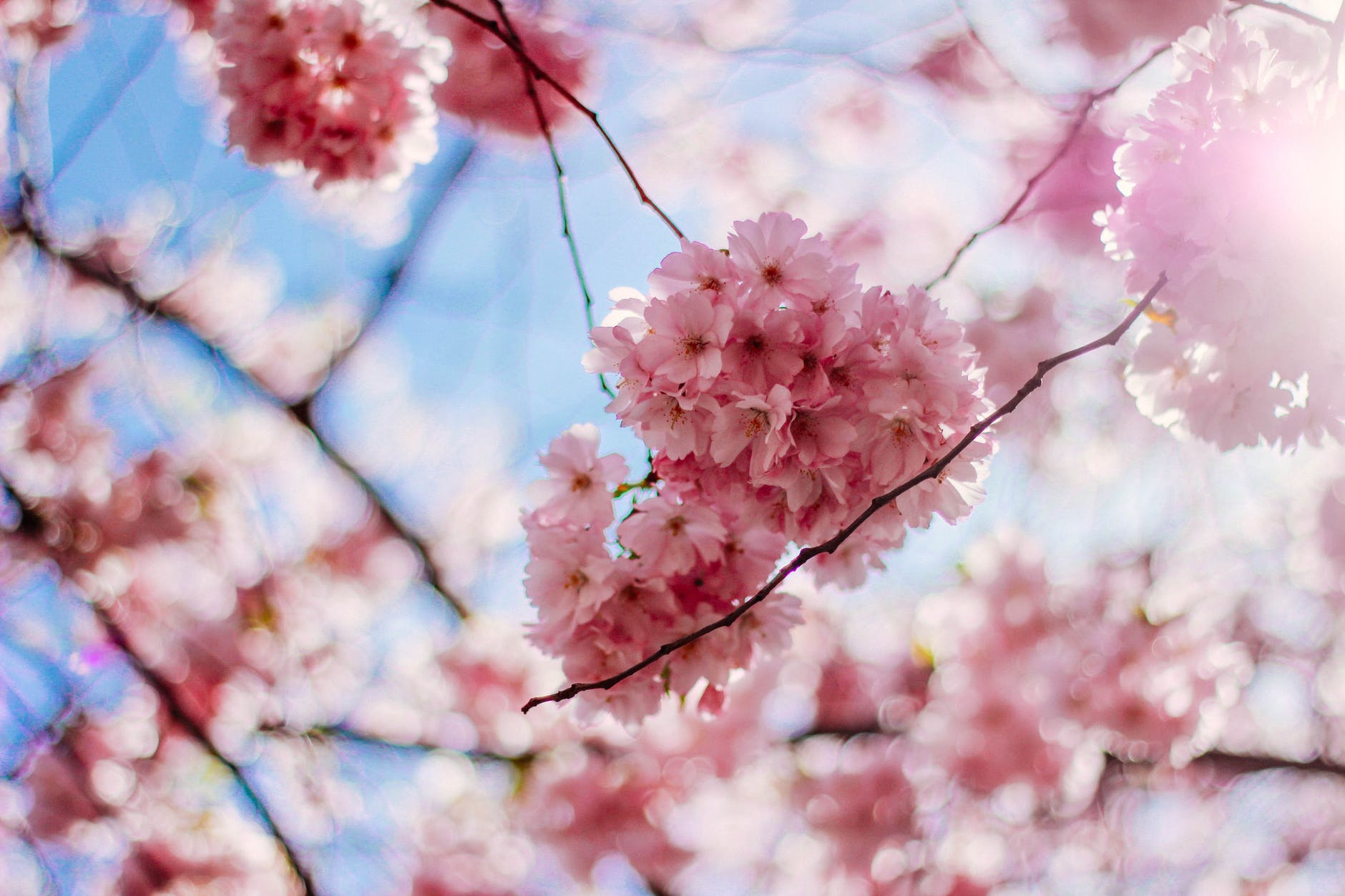
What a sweet and gentle picture; flowers in a garden, pink against summer blue skies. And there, just a whisp of white, tendrils of clouds, not enough to be cloudy or drear, but enough to rescue heaven from monotony.
This portrait of nature, of childhood’s garden, framed in brass, hung upon a wall in a quiet gallery. I was early, or late—I never knew what time I was at. Late night or early morning; I don’t know. The proprietor was gracious enough to let me in.
Quiet, and I myself as quiet as I could be, wandered—ceased to wander—I had stopped here. Such innocence. That’s what the picture brought out. Was it grand? Was it meaningful? No. It was just longing. For a moment, seeing it first from the corner of my eye, a pang struck my heart. It was a memory I could not remember, a childhood I had forgotten.
I supposed I must have been a child once, must have sat in a garden on a summer day and saw pink flowers. It wasn’t a good picture. It was a postcard. It was sentimentality. I was just projecting . . .
. . . but I was crying too.
Quickly, I pulled out a handkerchief and dabbed my eyes. I could hear the footsteps, polite but hurried, the excitement of the beating heart, the half asthmatic breathing of the curator.
He was at my side.
“Have you taken an interest, sir?”
I looked the drab painting over once again, making up my mind to say no.
“Yes,” I said.
“Very promising artist . . . ” his voice trailed off. “Oh dear. Have you cut yourself?” he asked.
“What?” I had half forgotten. “Nosebleed,” I smiled, being careful not to part my lips. Holding my handkerchief up to my nose, I said, “Darndest thing.” Before he could say or think anything else, I went on, “I think I’ll take it.” Pulling out my card, I asked, “Can you have it delivered?”
“Yes, sir.”
“Good,” I said. “I think I better retire. Don’t want to get blood on anything.”
 Tale Told