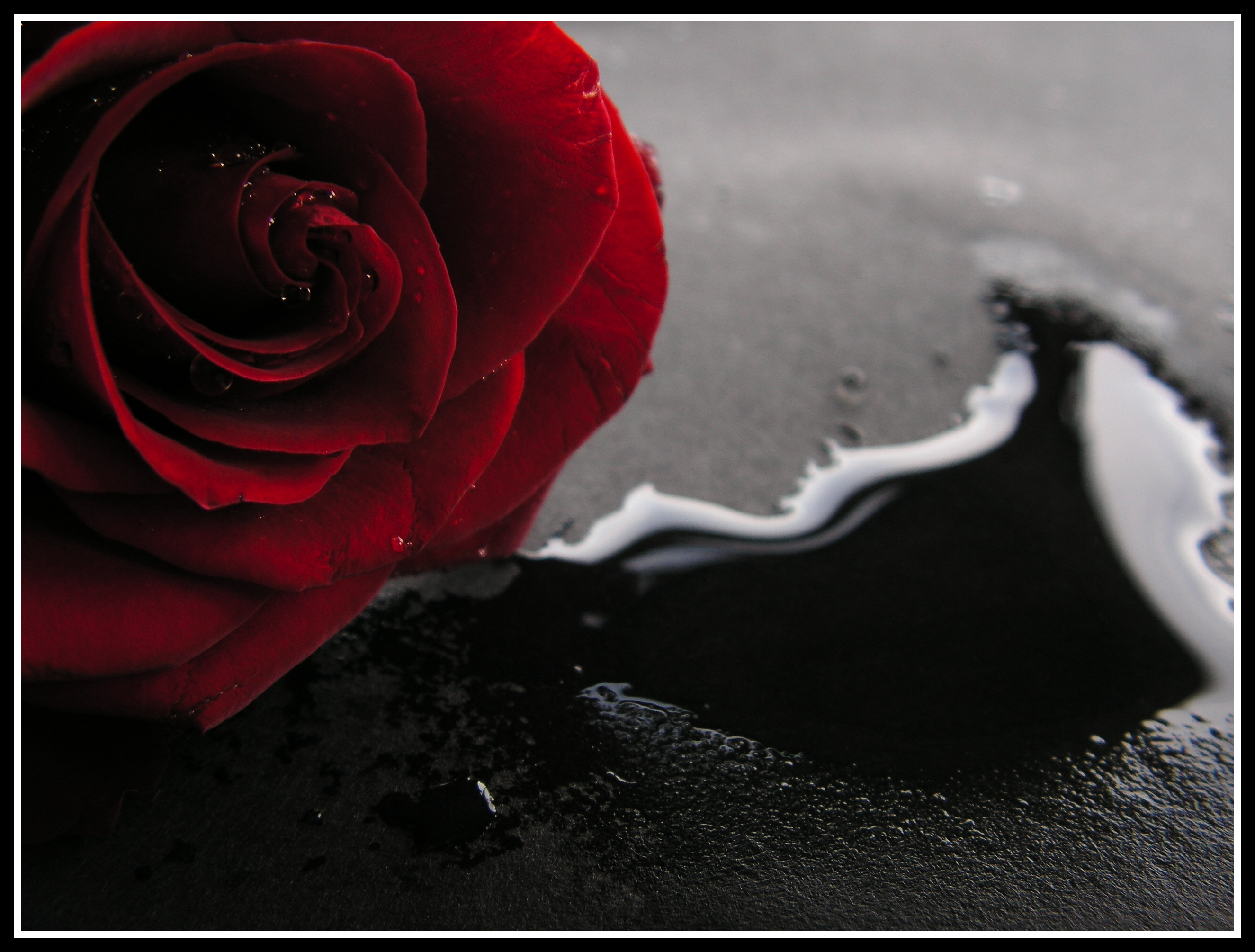
It was a normal post. Mostly normal. Letters, mostly invoices and cheques, and a rose; all arriving together. I wonder what correspondence our correspondence kept while waiting to be brought up. Here is a bill from the dry cleaners, a measly sum, but “I must be paid,” it says in the darkness of the letterbox. “Shirts must be washed, and a balance is due.” He says it with all the emotion and fervor of any great prophet. Nestled beside it is payment for a little matter, kept from becoming great; magnanimous gratitude will pay for the shirts and much more. What does this cheque say to its neighbor, whispered quietly among those letters: “I’ll pay. A life saved is worth many shirts; honor restored, a kingdom.” A king’s ransom would answer the plaintive cries of many bills.
But here, brought up with the post, what is this? What did it say to its neighbors, or did the letters shun the rose? Was this rose, a thing of passion and life, a red bloom with thorns, too proud to talk with these dead leaves whose matter only concerned money?
I look at the pile of letters and ask, “I hope you were not rude, not overly inquisitive, but polite letters coming up with this rose, a conversation may have occurred, you may have heard something. I was hoping, since I am to meet this rose, that you might furnish me with some hint. I do not want gossip. But if the rose spoke to you, whisper it here. It cannot be an admirer, for my face wards them off. Who would send me this rose? Yes, I see the rose has a tag, but I fear it. There may be a name there I do not wish to read.”
I am careful with the thorns, for they are sharp, as I turn the little card over. Yes, it is the name, it is a promise, and a warning, and a gift.
I’ll let the rose sit in a cup, for now. There’s little chance I’ll find a better vase before the sender comes tonight. If I live, I shall buy something elegant and slender to place it in, and it shall sit on my desk until it begins to whither.
 Tale Told