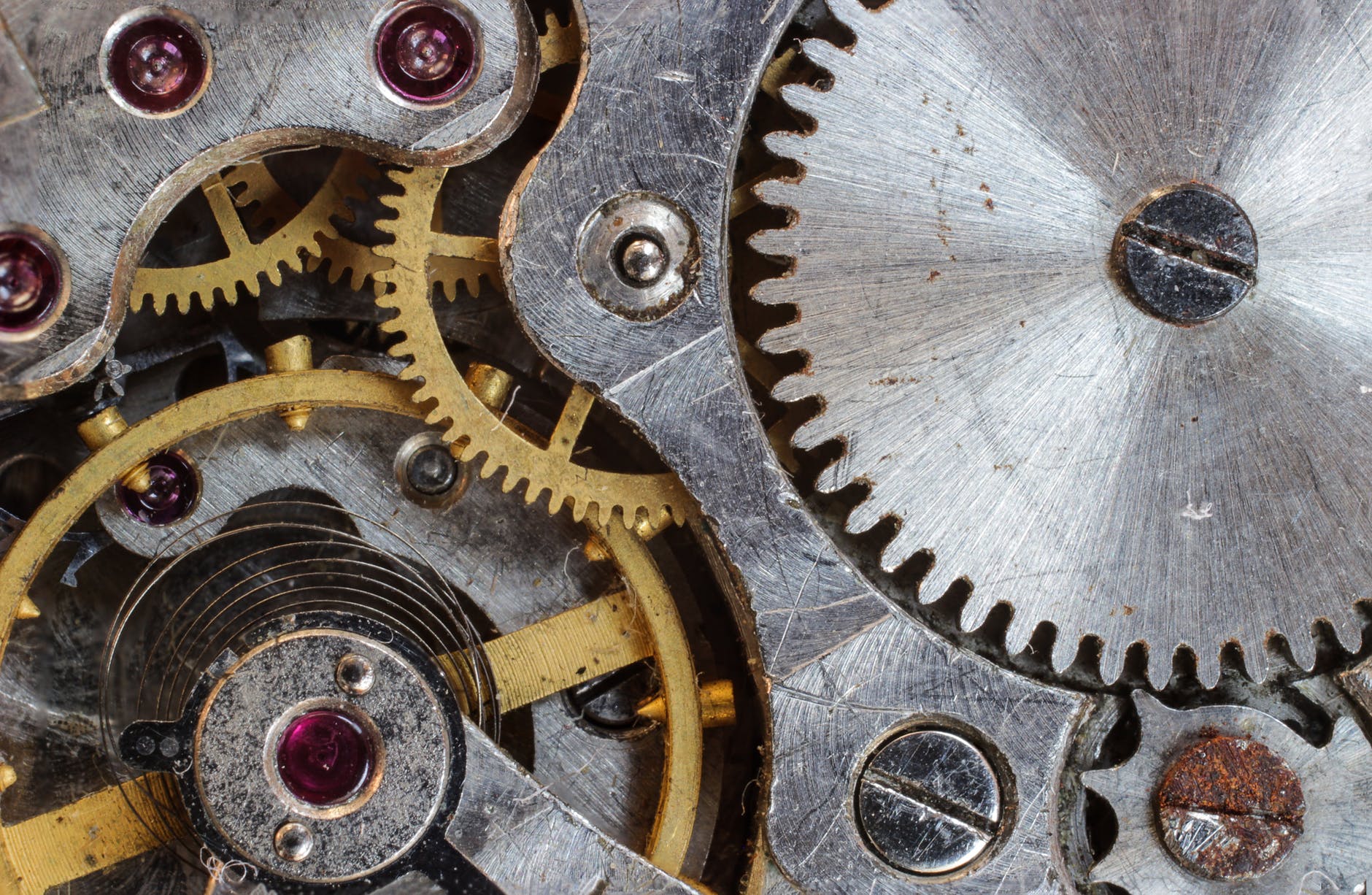
They called it the machine. It was a factory. Most of the men, coming onto four generations, were employed there, and those who weren’t were at least employed by the company. When they returned from it, they could still hear its mechanisms working through the night, reverberations of its turning wheels rumbling through the streets and homes of the nearby, company built town. The machine took no sabbath, and likewise the bosses saw no reason that men should want some day of the week off. There were no days holier than a workday.
No one knew exactly what the factory produced. One wing was dedicated to screwing in a certain bolt on a product, another to unscrewing it; at the same time workmen took hammers to bust up some crates, other hammers were tinkering away, driving nails in to make new crates; these women were busy filling the crates as they started down the conveyor belt at the end of which other women were busy unloading the same crates. It seemed, to some, that the machine’s primary output was more of itself as the factory seemed always to be expanding, stretching out some new wing for some new purpose indistinguishable from anything previous. But now and again, a stranger or some visiting relative would ask what was done, what was ever actually completed in the factory, and no satisfactory answer was ever given. Work, they would reply, but what work?
 Tale Told