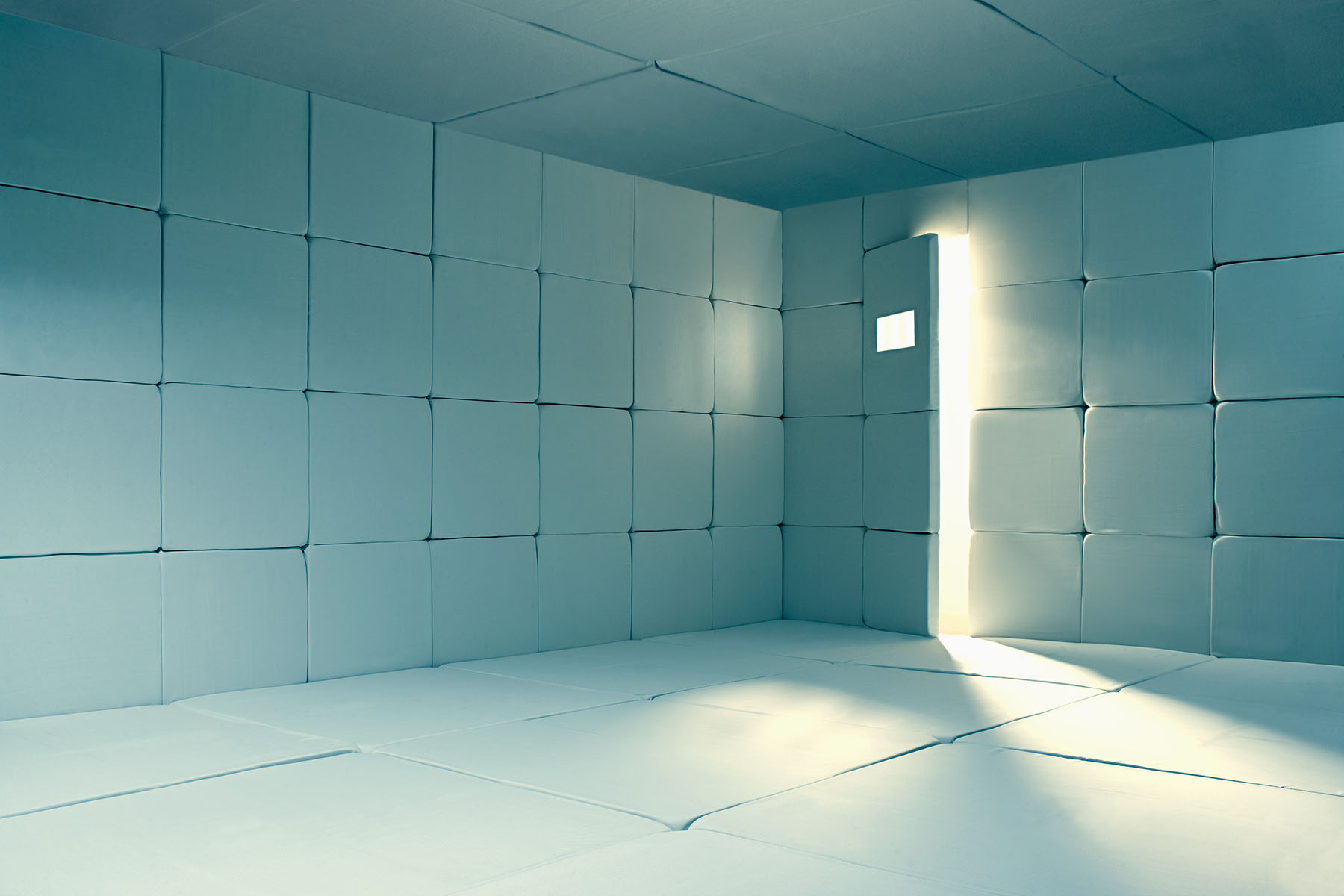
The crazed convulsions reached their peak, the patient straining at his bonds, then suddenly were ended. Comatose, barely breathing, he lay. I grabbed his wrist. His pulse was weak. I kept my finger pressed into the vein, my eye on the clock, counting the beats of his heart.
“Cover it up,” I say after a moment, and a curtain was pulled over the strange sketch. “That, ladies and gentlemen,” they begin rolling the weird image away, “is one of three typical responses. Certainly, it is the most flamboyant. Our patient here has reliably reacted the same way to every exposer as . . . “
A hand was raised. I nodded.
“You said typical, but we all saw it.” He laughs nervously. “What are the other reactions?”
“Well, you’ve seen one, and it is an extreme case. You can see everyone else here too, so you tell me, how did they react.”
The student looks away from me, his hand reaching up to his chin.
“Uh,” he begins, “Some didn’t look.”
“Didn’t look?”
“Yeah,” he says, “When the curtain was drawn, a lot of us looked away.
“A natural response to the fear of seeing something dangerous, but what of those that looked?”
“Well,” he swallowed, “I wasn’t watching them.”
“What were you watching? The patient?”
“Yeah,” he said nodding, “The patient.”
“And you didn’t look at the picture?”
“Well, I looked at it—”
“And what happened to you?”
“I felt . . . cold.”
 Tale Told
1 Comment