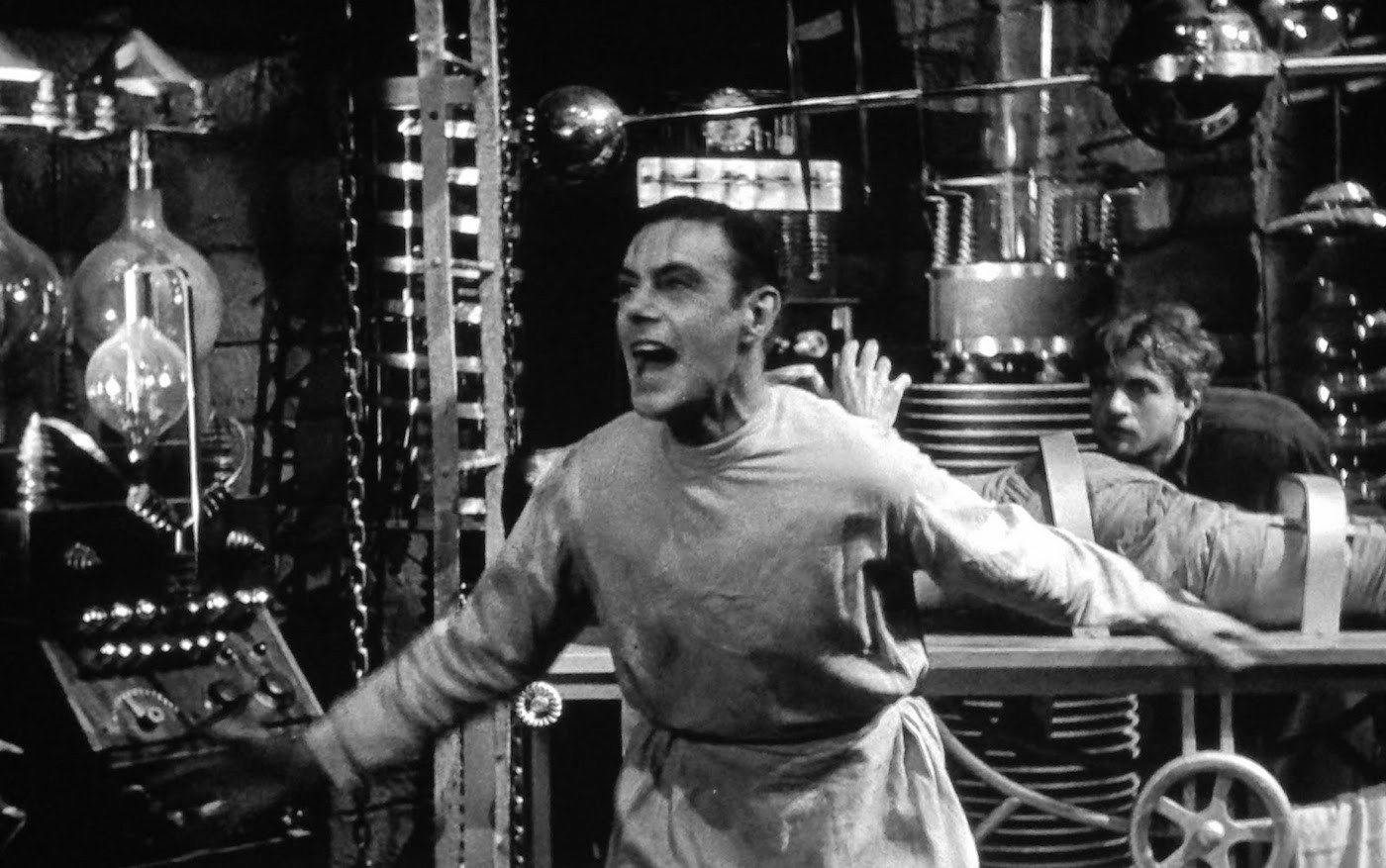
I think one of the major problems I find when considering the atheist position is that the philosophy doesn’t match the world. It’s too simple a position. Discounting the rather obtuse fact that in personal experience I’ve yet to meet anyone who consistently lives out the atheist doctrines, the mere assertion that the physical is the primary reality stands opposed to the nearly universal experience of the transcendent. Reality’s opposition to atheism is perhaps mitigated by science: science often stands in the face of perceived reality, replacing much of what was once, “the gods,” with an exclusively physical explanation.
However, there are obvious pitfalls when using science to holistically discredit the spiritual. One glaring issue is that the domain of science is the physical, i.e. not the spiritual. When the voice of science speaks within this boundary, it has authority, but when that authority is ripped from the context of the physical and leveraged against the spiritual, then it has ceased to in fact be science. Science speaks of matter, how it moves and what it does; it truly has nothing to say regarding the meaning or significance of those facts it observes. It just observes them, and whenever its voice is heard beyond that limited domain, it is not truly science, but a mimicry.
This is not to say that it is impossible to make a scientific explanation of the world as man perceives it: we live in the physical, we are physical, and the events we experience—if we are to experience them—must be physical. Science can speak of our senses, can display the brain’s flow of thoughts, or very soon will, and so a spiritual experience can be explained by science. Imagine a more perfected science which can show in great detail the workings of the brain, and we can watch one electron exciting another in a long chain of neurons.
No doubt, in the future, such an advancement will be lauded the final nail in the coffin of religion. “See, that is your God,” those atheists will proclaim. “He is the miss-firing of evolution molding your perception. We atheists are more advanced; we’ve disabused ourselves of nature’s lies.”
But if they were to watch their instruments further, they might notice the brain’s furthered activity at their words as the subject of their study patiently listened to their dribble. The question comes that if God is illusion cast up by nature, and we know it because we can explain how the brain creates the experience, then when we can in the same fashion explain our hearing, taste, touch, sight, and smell, how do we discern the real experience from the false. Is it not obvious that the conclusion is not predicated upon science—upon the observation—but preconceived before the science had any say on the matter?
“Atheism turns out to be too simple. If the whole universe has no meaning, we should never have found out that it has no meaning…”
C. S. Lewis
`Well!’ returned Scrooge, `I have but to swallow this, and be for the rest of my days persecuted by a legion of goblins, all of my own creation. Humbug, I tell you! humbug!’
At this the spirit raised a frightful cry, and shook its chain with such a dismal and appalling noise, that Scrooge held on tight to his chair, to save himself from falling in a swoon. But how much greater was his horror, when the phantom taking off the bandage round its head, as if it were too warm to wear indoors, its lower jaw dropped down upon its breast!
Scrooge fell upon his knees, and clasped his hands before his face.
`Mercy!’ he said. `Dreadful apparition, why do you trouble me?’
`Man of the worldly mind!’ replied the Ghost, `do you believe in me or not?’
`I do,’ said Scrooge. `I must…’
Charles Dickens, A Christmas Carol
 Tale Told