Today is Veterans’ Day, and my thoughts fall upon one veteran now passed, a man I knew for a little less than a year. He was in Vietnam, and the pain of what he went through seemed to ever weigh on him. I’ll be paraphrasing him terribly, and I know not if he was quoting another, but once he said something like: “Those who glorify war don’t know what they’re talking about; only listen to what a soldier has to tell you.”
He told many heartbreaking stories, stories I hope never to forget, but not all soldiers, not all men who have battled in the trenches, sing the same tune. None can deny the horror, but whereas some condemn war as an ultimate evil, others hold onto what seem archaic ideals of glory, finding a nobility through all the ruin and the bloodshed.
I am no voice of authority here: I have never served, and I doubt any branch of the military would take me. But I listen and read, and two voices—both bearing this dreadful authority that they have served where I have not—contend.
To hear of the first, that of my friend’s voice, one only has to read a poem by Wilfred Owen. In this poem, Dulce et Decorum Est, he reprimands those, reprimands a nation, who would preach, as he puts it:
The old Lie: Dulce et decorum est
Pro patria mori.
(The Latin is a quote from Horace: “It is sweet and seemly to die for one’s country.”)
The poem threatens the eyes with tears; the vivid images of a WWI gas attack victim denies Horace’s adage that, “it is sweet and seemly to die for one’s country.” But other voices are there, and they don’t for a minute repress any of this carnage. Yet they contend with the conclusion. I fear I am not well enough read to present as stirring a quote for this side, however my forays into the Iliad present to my mind a more encompassing view than that of Owen.
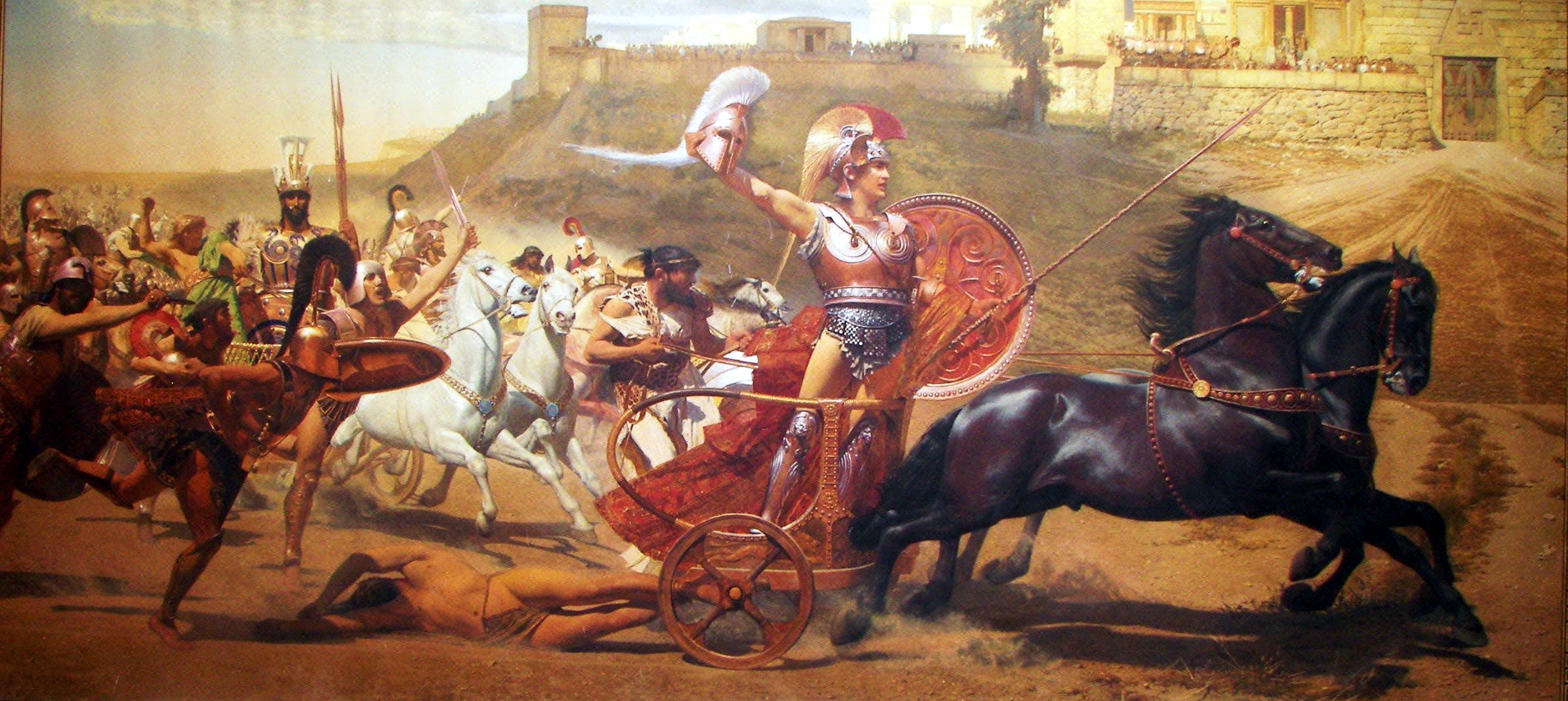
The Iliad, unlike Horace’s Ode, shows the cruel and bloodied reality. Yet the Iliad does not condemn in the same way as Owen’s poem. There are these parts where the narrative breaks, and we learn a little of the history, goals, and dreams of an individual soldier right as he dies. The enemies of the Trojans are not cookie-cutter bad guys, they are established characters the audience sympathizes with.
And what all these characters are doing, the laying of themselves down to the ravages of war—a brutal war seemingly waged over one girl—is honored, almost to the point of making war, war shown in bloody horrible reality, the most honorable thing man can do.
I believe my friend was right, that the greatest authority on this is the soldier, and in this day set aside to honor our veterans, I commend that we listen to them.
 Tale Told